Researchers have found that certain substances can significantly extend the healthspan of mice.
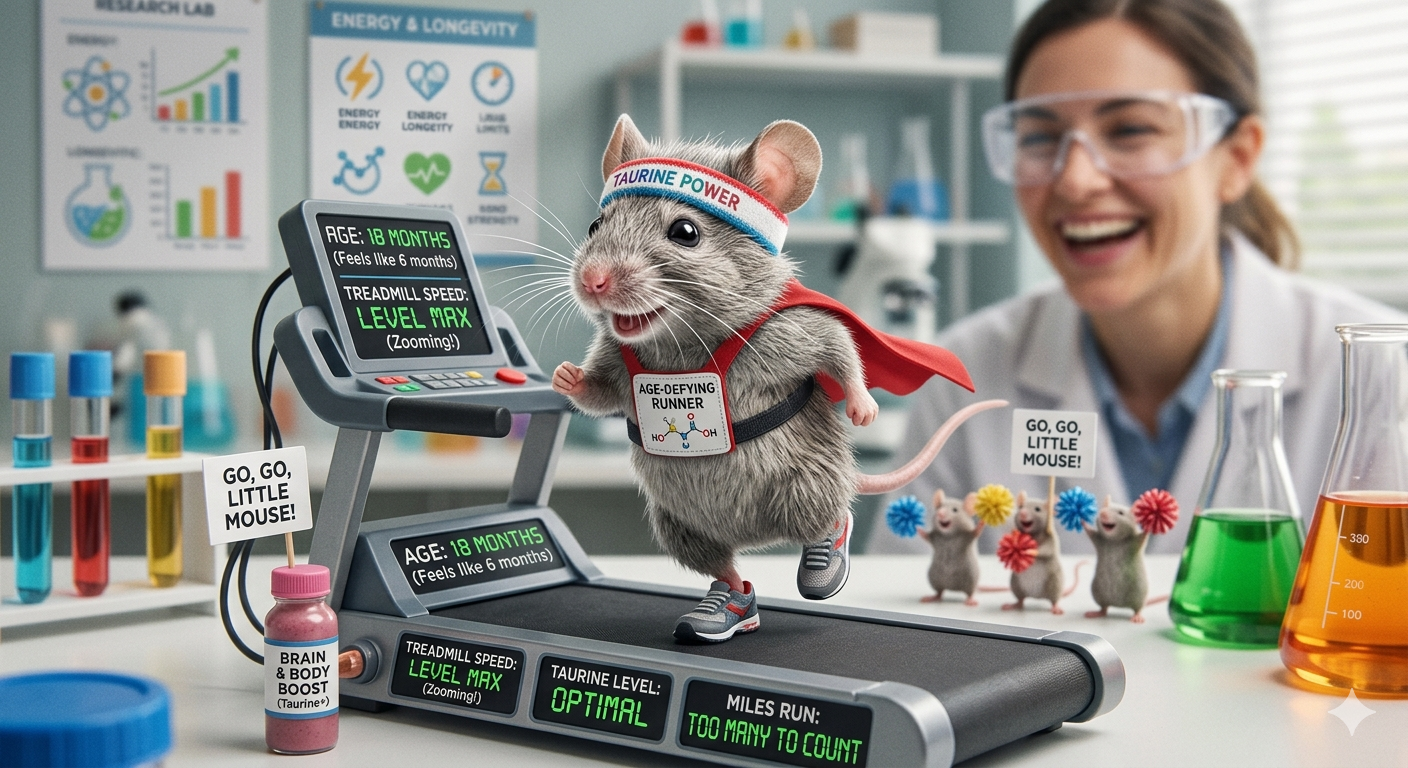
When elderly mice were given taurine supplements, their physical fitness improved to the point where they could run much longer on treadmills.
The study showed that taurine levels decline with age, and replacing it helps repair cells and boost muscle strength.
In addition to taurine, a drug called Rapamycin has also been shown to make old mice more active and youthful.
Currently, the FDA does not recognize aging as a disease that can be treated with drugs.
Pharmaceutical companies argue that if aging is classified as a medical condition, it will be easier to get approval for longevity .
The TAME trial aims to prove that a single drug can delay multiple age-related chronic diseases simultaneously.
Scientists are developing drugs that can restore memory by clearing out toxic proteins in the brain.
New research suggests that certain molecules can stimulate the growth of new neurons, even in an aging brain.
Clinical trials are underway to test if these treatments can improve cognitive function in humams.
If we apply the results from mouse studies to humans, we could potentially live into our 100s or 110s.
However, the goal is not just living longer, but increasing "healthspan," ensuring our minds and bodies remain sharp.
Some scientists predict that the first generation to live past 150 may have already been born.
It is certainly an exciting finding! The study you are referring to has sparked a lot of conversation in the scientific community regarding healthy aging.
Here is the translation and vocabulary breakdown for the key details of that research:
Researchers found that mice given taurine supplements were much healthier and lived about 10% to 12% longer than those that did not receive it.
The taurine-fed mice showed significant improvements in muscle strength, coordination, and endurance on treadmills.
As animals age, their natural levels of taurine drop significantly, and replacing it seems to help slow down the aging process.
Is it okay for humans, SoonHee?
While the results in mice (and similar studies in monkeys) are very promising, scientists urge a bit of caution for us humans:
• Clinical Trials are Needed: Most of this research has been on animals. Human clinical trials are still underway to see if the same "anti-aging" effects happen in people without long-term side effects.
• Dosage Matters: The "high doses" given to the mice would be quite large for a human. It is always best to consult a doctor before starting any high-dose supplement.
• Natural Sources: If you want to boost your taurine naturally, it is found in seafood (like scallops and shrimp), seaweed, and dark poultry meat.
It is wonderful to see how science is finding new ways to help us stay energetic as we age!
'일상 폰 사진' 카테고리의 다른 글
| Photography is the philosophy of subtraction! (0) | 2026.04.13 |
|---|---|
| True Love & Sacrifice. (0) | 2026.04.12 |
| the truth of vivid dream. (0) | 2026.04.10 |
| Kimch & Microplastics. (0) | 2026.04.10 |
| What do I think about working? (0) | 2026.04.05 |